
The College Student's Guide to Selling Textbooks (2026)
The average college student spends over $1,200 a year on textbooks. Most recover less than 20% of that — not because the books aren't worth more, but because the process gets in the way. This guide covers every friction point college students face when cashing out their books: no printer, unfamiliar payment apps, tight move-out timelines, and the question of whether to sell to a classmate or ship to a buyback service.
The Unique Challenges College Students Face
Most textbook selling advice assumes you're at home, with a printer, a car, and an established PayPal account. College students are often working with none of those. The specific challenges:
- No printer for prepaid shipping labels
- New to payment apps — unsure which are safe
- Tight timeline: moving out before the market window closes
- Parents paid for the books and expect some money back
- No idea whether campus peer sales beat buyback platforms
None of these are hard to solve — but they require knowing your options. Here's how to handle each one.
Getting Paid: Your Options
Before you list anything, decide how you want to get paid. Different platforms require different methods, and some are better suited to campus peer sales than others.
- Venmo / Zelle — best for peer-to-peer campus sales. Fast, free, and universally used by college students. Set your Venmo transactions to Private so your financial activity isn't visible to strangers.
- PayPal — required by most online buyback platforms (BookScouter, BooksRun, Chegg). Set up a free account if you don't have one. It takes 1–3 business days to transfer to your bank.
- Direct deposit / ACH — some platforms (Valore, BookDeal) offer direct bank transfer. Takes a few days but has no PayPal withdrawal limits.
- Check by mail — offered as an option on some platforms but avoid it if you can. Checks take 1–2 weeks, and depositing via your banking app is an extra friction point.
| Payment Method | Best For | Speed | Notes |
|---|---|---|---|
| Venmo | Campus peer sales | Instant | Set transactions to Private |
| Zelle | Campus peer sales | Instant | Works via your bank app; no separate account needed |
| PayPal | Online buyback platforms | 1–3 business days to bank | Required by most major buyback sites |
| Direct deposit | Larger platform payouts | 2–5 business days | No limits; good for higher-value books |
| Check by mail | Last resort only | 1–2 weeks | Slow; avoid unless it's the only option |
Shipping Without a Printer
Most textbook buyback programs (BookScouter, BooksRun, Chegg, Valore) email you a prepaid USPS shipping label. If you don't have a printer — and most dorm residents don't — you have two easy options:
- UPS Store printing — walk in and show the label on your phone. They'll print it for a small fee, usually $1–$2. Worth it for a $50+ payout.
- USPS QR code drop-off — some platforms support USPS's mobile barcode system. Show the QR code at any post office counter. No printing, no fee. Check if your platform supports this before heading to the UPS Store.
Campus libraries and student union copy centers sometimes also print single pages cheaply. Ask — it may save you the trip.
Packaging the Book
You don't need to buy anything. Check your dorm room or apartment for old Amazon, Walmart, or Chewy shipping boxes — they're perfectly reusable and exactly the right size for most textbooks. Padded mailer envelopes from previous deliveries work just as well for single books. If you don't have any on hand, a flat-rate USPS box is free at the post office and ships for a fixed rate regardless of weight.
Selling to a Classmate: The Cleanest Deal
The fastest and most profitable option is almost always to sell directly to someone in the same course or a year behind you. You skip the platform fee, skip shipping, and get paid on the spot.
Where to Find Buyers
- Class GroupMe or Discord — post directly in the course chat. These are the students who just finished the same class and know exactly what the book is worth.
- University buy/sell Facebook group — most schools have one. Search "[University name] textbooks buy sell" or "[University name] classifieds."
- Campus bulletin boards — old-school but still effective near the department building for your course.
- Reddit — some universities have active subreddits with a buy/sell flair. Worth a post for high-value books.
How to Handle the Exchange
Meet in a public campus space — the library, a student union common area, or near the relevant department building. Let the buyer inspect the book, confirm edition and condition, then complete the Venmo payment before handing it over. This is standard practice and no one will think it's odd.
Quickly Checking eBay Market Value
Before you post anything — to a classmate, a buyback site, or eBay itself — you need to know what your book is actually worth on the open market. The fastest way to do this for a stack of books is with TroveScore: point your phone camera at the shelf, and it identifies each book and pulls live eBay sold-price data in seconds. No barcode scanning, no searching each ISBN one at a time.
Knowing the eBay market value upfront changes how you approach the sale — and how much you actually walk away with. If a book is fetching $90 on eBay, it's worth listing yourself rather than taking $40 from a buyback program. If it's showing $18, use the buyback service and move on. Most students have two or three books in a typical semester stack that are worth real money and several that aren't — the problem is not knowing which is which until you check.
How TroveScore works
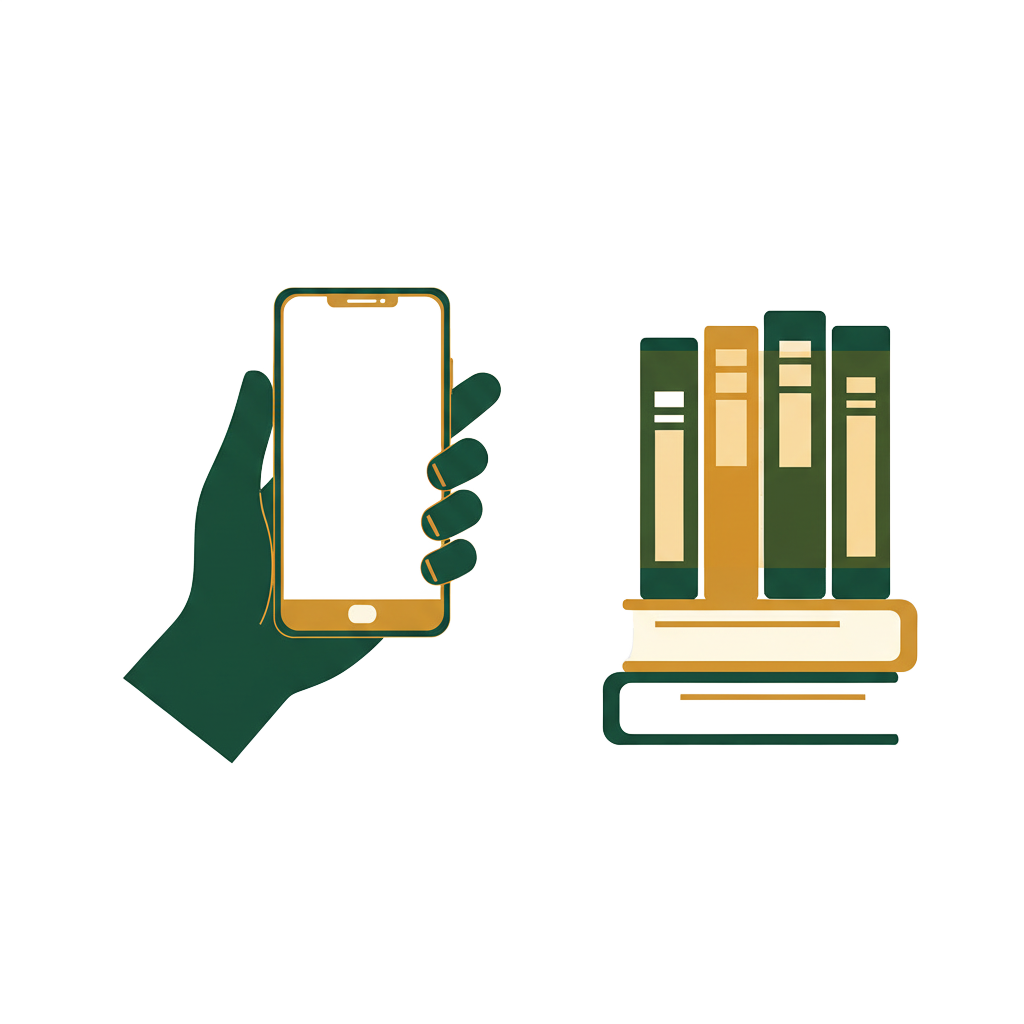
Point your phone at your textbook shelf. One photo covers everything in frame — no need to scan books one at a time.
TroveScore recognizes each title and pulls live eBay sold-price data — so you see real market value, not list price guesses.
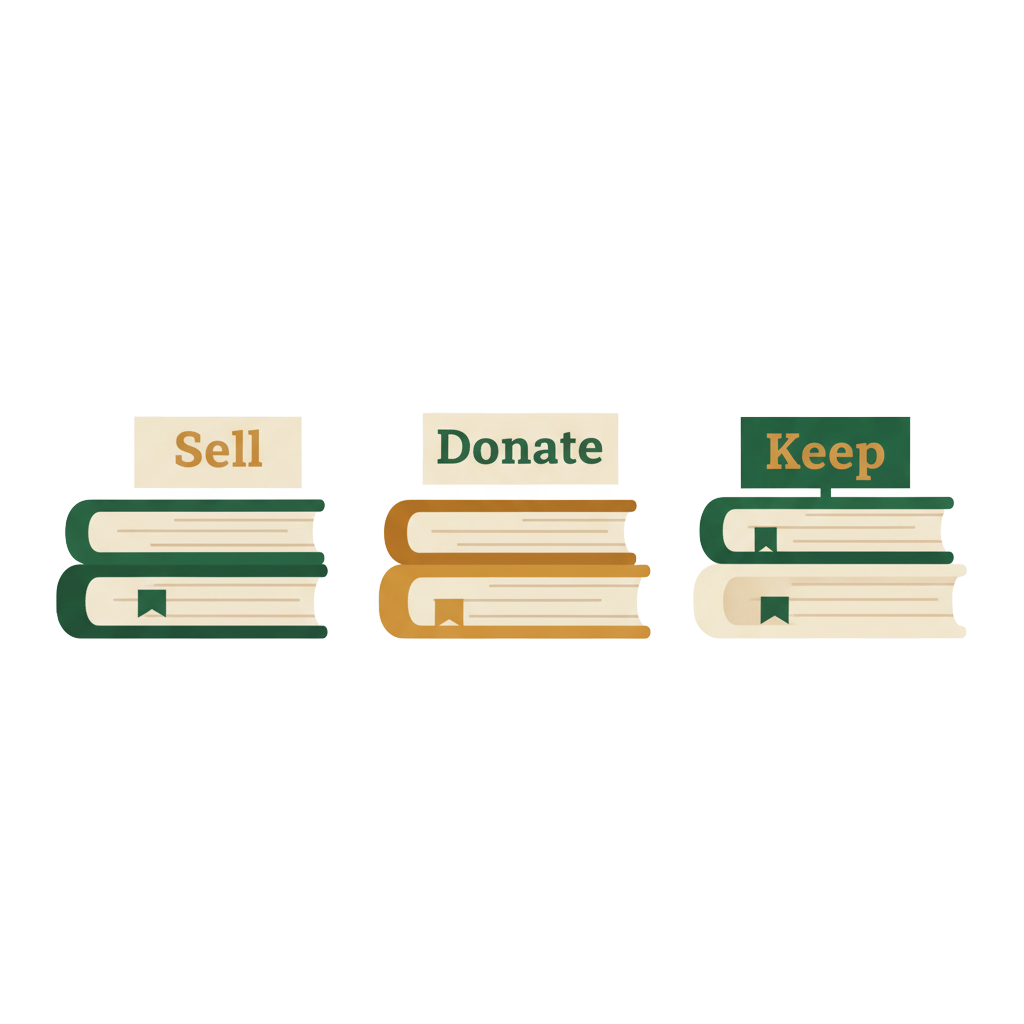
Each book gets a recommended action: list it on eBay, send it to a buyback program, donate it, or keep it. Books flagged for sale can be listed on eBay directly from the app — so you go from photo to live listing without ever opening a browser.
Timing: When to Sell Matters More Than Where
The single biggest mistake college students make when selling textbooks is waiting too long. Demand is highest during a narrow window at the end of each semester — and it drops off sharply once that window closes.
Approximate resale return as % of original retail price. Current edition, Good condition.
Handling the Parent Factor
If your parents paid for the textbook and expect to see some of that money back, be upfront about what you received and transfer it promptly. Venmo and PayPal both make it easy to send money to a parent in a few taps.
Showing them a BookScouter price comparison helps explain why you got $45 back for a $120 book rather than $90. BookScouter aggregates buyback offers from dozens of vendors in real time — if the best offer is $45, that's genuinely the market rate for that book right now, not a negotiating starting point.
If the book is still current edition and in good condition, it may be worth listing on eBay yourself for a higher return. But if time is short (moving out, end of year rush), a buyback service is the right call, and the price difference is explainable.
Quick-Reference: Common Situations
| Your Situation | Recommended Approach |
|---|---|
| Moving out of dorm in 48 hours | Post to campus Facebook/GroupMe immediately. Take whatever you get — storage and shipping later cost more in hassle than the extra few dollars. |
| End of semester, no immediate rush | List on eBay or Amazon at full resale price. Give it 2–3 weeks before dropping the price. Check BookScouter as a floor. |
| No printer for shipping label | Check if platform supports USPS QR drop-off. Otherwise, UPS Store prints from your phone for $1–$2. |
| Parents want the money back | Send via Venmo or PayPal immediately after sale. Share a BookScouter screenshot to show the market rate. |
| High-value book ($80+ resale) | List yourself on eBay. The extra effort is worth it at this price point — a 20% difference is $16 or more. Use TroveScore to confirm the market value before deciding. |
| Book worth less than $20 | Use a buyback aggregator (BookScouter) or donate. Listing individually is not worth your time. |
Key Takeaways
- Venmo or Zelle for campus peer sales; PayPal for online buyback platforms. Never accept personal checks from strangers.
- No printer? Use USPS QR code drop-off (free) or a UPS Store ($1–$2). Don't let this be the reason you don't sell.
- Campus peer sales — via GroupMe, Discord, or the university Facebook group — are usually the fastest and most profitable option. No shipping, no fees.
- Sell within two weeks of finishing the course. Timing matters more than platform choice for most books.
- If parents paid for the textbook, transfer the proceeds promptly and show them a BookScouter comparison to explain the market rate.
- For books worth over $80 resale, list on eBay yourself. For anything under $20, use a buyback service or donate. TroveScore tells you which is which in seconds — and lets you list the high-value ones on eBay directly from the app.
Don't know which books in your stack are worth listing vs. donating? Point your phone at the shelf and let TroveScore identify each book and pull live eBay pricing data — in seconds, no barcode scanning required.
Scan your shelf — free, no account →Frequently Asked Questions
What payment app do most college students use to sell textbooks?
Venmo and Zelle are the most common for peer-to-peer campus sales because they're instant and fee-free. PayPal is required by most online buyback platforms (BookScouter, BooksRun, Chegg), so it's worth having both set up. Set your Venmo transactions to Private so your financial activity isn't visible to strangers.
How do I ship a textbook if I don't have a printer at school?
Most buyback programs email a prepaid USPS label. If you can't print it, take it to a UPS Store — they'll print it from your phone for about $1–$2. Alternatively, check if the platform supports USPS QR code drop-off: no printing needed, just show the QR code at the counter.
Can I sell a textbook directly to a classmate safely?
Yes — and it's usually the best deal you'll get. Post in your class GroupMe, the course Discord, or your university's buy/sell Facebook group. Meet in a public campus space, check the book together, and use Venmo on the spot. No shipping, no fees, no waiting.
When is the best time for a college student to sell textbooks?
The week of finals or immediately after is the best time — the next semester's students are actively looking. For spring semester books, sell by mid-May at the latest. Waiting until summer can cut your sale price by 30–50% as demand drops sharply once courses end.
My parents paid for my textbook. Do I owe them the resale money?
That depends on your family's arrangement, but being upfront is always the right move. Venmo and PayPal both make it easy to send money home. Showing a BookScouter price comparison helps explain exactly why you got $45 back on a $120 book rather than $90 — that's simply the market rate.